Updated: 31 August 2026
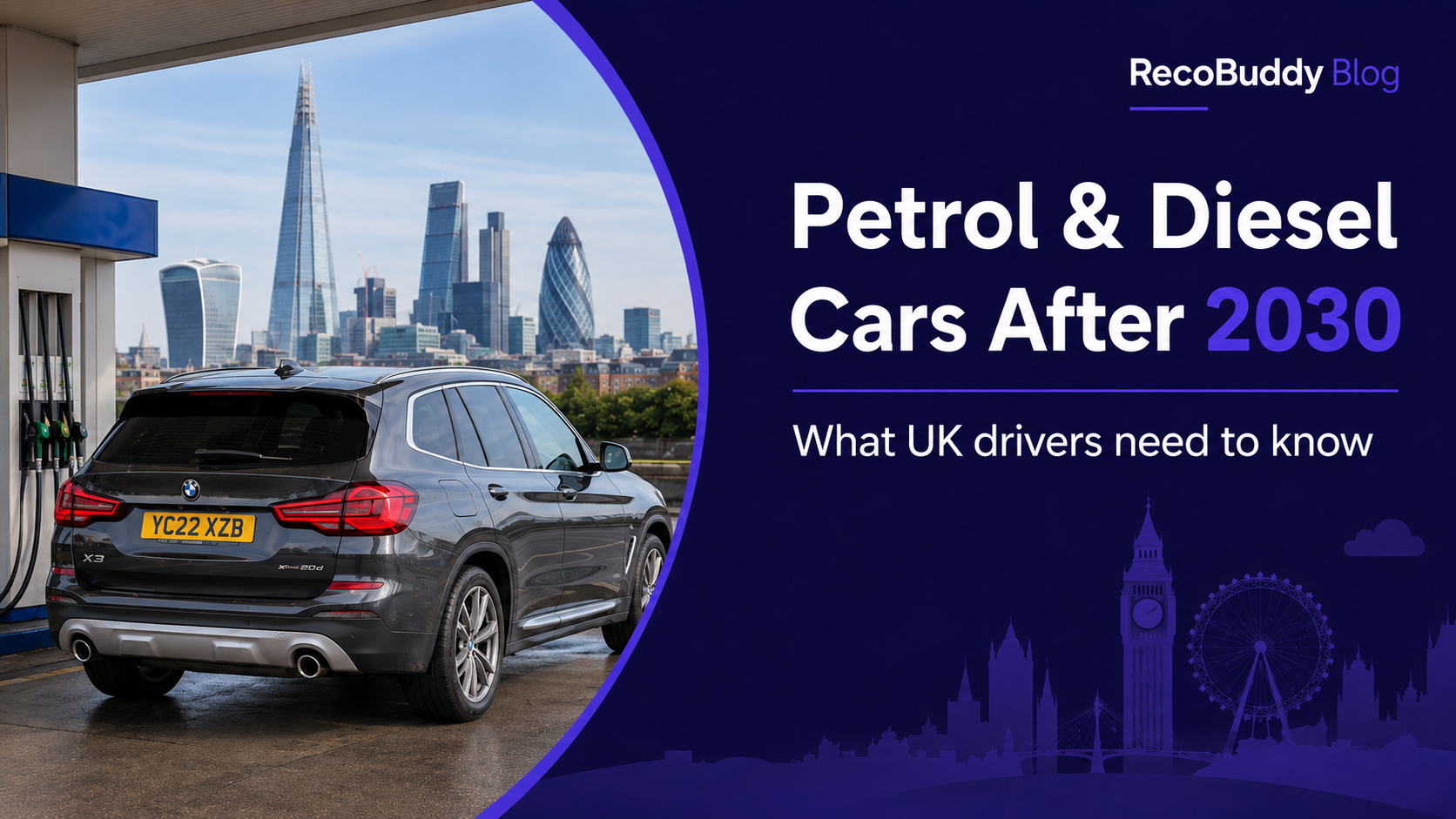
The future of petrol and diesel cars in the UK is back in the spotlight after the Government launched a new review of its Zero Emission Vehicle (ZEV) Mandate.
The review, opened on 14 August 2026, is looking at how the UK should manage the transition toward ending sales of new cars powered solely by petrol or diesel from 2030, before moving to 100% zero-emission new car and van sales by 2035.
For drivers, the headlines can be confusing.
Does this mean petrol and diesel cars will be banned from UK roads in 2030?
Will you have to scrap your existing car?
Can you still buy a used petrol or diesel vehicle after 2030?
The short answer is: existing petrol and diesel cars are not being banned from the road in 2030.
Here’s what UK drivers need to know.
What Is the Government Reviewing?
The Department for Transport has launched a formal review of the rules governing the UK's transition to zero-emission vehicles.
The consultation is examining several areas, including:
annual electric vehicle sales targets for manufacturers
how flexible manufacturers should be allowed to be
alternative ways of meeting emissions targets
technical changes to the current ZEV rules
how the phase-out of new cars relying solely on internal combustion engines should work from 2030
The consultation is open until 23 October 2026, and the Government says the evidence gathered could lead to future changes to the current regulations.
Are Petrol and Diesel Cars Being Banned in 2030?
No — not existing cars.
This is one of the biggest misunderstandings surrounding the 2030 policy.
The Government's current commitment relates primarily to the sale of new cars powered solely by internal combustion engines.
It does not mean that every petrol or diesel car already on UK roads will suddenly become illegal on 1 January 2030.
If you already own a petrol or diesel car, the current policy does not require you to scrap it simply because 2030 arrives.
The Government's stated direction remains that sales of new petrol and diesel cars will be phased out from 2030, with all new cars and vans expected to be zero-emission by 2035.
Can You Still Drive a Petrol Car After 2030?
Under the current plans, yes.
Existing petrol and diesel vehicles will still be able to remain on the road, provided they continue to meet the usual legal requirements.
That includes things such as:
having a valid MOT where required
being insured
being taxed
remaining roadworthy
complying with applicable emissions or clean-air-zone rules
The 2030 target is not currently a deadline for individual motorists to stop driving their existing petrol or diesel cars.
Can You Still Buy a Used Petrol or Diesel Car After 2030?
Under the current policy direction, yes.
The restriction concerns the sale of certain new petrol and diesel vehicles.
The used-car market is therefore expected to continue operating.
That means motorists should still be able to buy and sell existing petrol and diesel cars after 2030.
In fact, the transition could make the used-car market particularly interesting.
Some drivers may choose to keep petrol or diesel cars for longer, while others may switch to electric vehicles and sell their previous cars.
That could increase movement within the second-hand vehicle market between:
private sellers
dealerships
auctions
car traders
garages
vehicle remarketing companies
And many of those vehicles will need to be collected or transported around the country.
What About Hybrid Cars?
This is where the rules become more complicated.
The Government's previous policy position allowed certain hybrid vehicles to continue being sold between 2030 and 2035, depending on their emissions and technology.
The latest review is specifically examining how the phase-out of cars relying solely on internal combustion engines should be defined.
That means the precise treatment of different types of hybrids remains an important part of the policy discussion.
Drivers considering buying a hybrid should therefore keep an eye on future Government announcements rather than assuming every hybrid will automatically be treated the same way.
What Is the ZEV Mandate?
The Zero Emission Vehicle Mandate is designed to encourage manufacturers to sell an increasing proportion of zero-emission vehicles.
Rather than immediately banning petrol and diesel cars, the policy gradually changes the mix of new vehicles manufacturers are expected to sell.
Manufacturers have annual targets for the proportion of qualifying zero-emission vehicles they sell.
The Government's latest review is looking at whether those targets and the flexibility available to manufacturers remain appropriate.
Why Is the Government Reviewing the Rules?
The transition to electric vehicles is happening quickly, but it also creates significant challenges for manufacturers, dealers and consumers.
The Government says more than one in four new cars sold in the UK are now electric, while electric vehicle sales in July 2026 were around 45% higher than July 2025.
More than two million electric vehicles are now registered on UK roads.
However, the industry still has to deal with issues including:
the price of new electric cars
charging infrastructure
consumer demand
battery technology
manufacturer investment
resale values
fleet transition
availability of affordable EVs
The Government is therefore reviewing whether the existing ZEV rules remain the best way to reach the 2035 target.
Does This Mean the 2030 Deadline Could Change?
Potentially, aspects of how the policy works could change.
The consultation is explicitly examining the pathway toward the 2030 phase-out and the operation of the ZEV Mandate.
However, motorists should be careful with headlines suggesting that the Government has simply scrapped or delayed the 2030 target.
As of 31 August 2026, the Government continues to state its intention to phase out sales of new cars relying solely on petrol or diesel from 2030 and reach 100% zero-emission new car and van sales by 2035.
The review may alter how those goals are achieved rather than necessarily removing them altogether.
Should You Still Buy a Petrol or Diesel Car in 2026?
For many drivers, buying a petrol or diesel car can still make practical sense.
The right decision depends on factors including:
how many miles you drive
where you live
access to home charging
your budget
how long you plan to keep the vehicle
whether you regularly enter clean-air zones
insurance costs
depreciation
fuel costs
A relatively new petrol or diesel car bought today could realistically remain in use well beyond 2030.
The key thing to remember is that the 2030 policy concerns new-car sales, rather than making existing petrol and diesel vehicles illegal.
Will Petrol and Diesel Cars Become Worthless?
There is currently no reason to assume that petrol and diesel cars will suddenly become worthless in 2030.
Millions of combustion-engine vehicles are likely to remain on UK roads for years afterwards.
The value of individual cars will continue to depend on factors such as:
age
mileage
condition
service history
reliability
model desirability
fuel costs
future taxation
emissions restrictions
Some vehicles may depreciate faster as EV adoption increases, while desirable or economical petrol and diesel models could retain strong demand in the used market.
What Does This Mean for Car Dealers and Traders?
The transition could significantly reshape the UK used-car market.
Dealers may increasingly find themselves buying vehicles from locations much further away as stock becomes more fragmented between:
petrol vehicles
diesel vehicles
hybrids
plug-in hybrids
fully electric vehicles
Online auctions and digital vehicle marketplaces are also making it easier for businesses to buy stock nationally.
That creates another challenge:
How do you get the vehicle back to your dealership?
Driving every purchased vehicle back isn't always practical.
Vehicles may be:
unregistered
awaiting preparation
non-running
damaged
bought from auction
located hundreds of miles away
Professional vehicle transportation can therefore become an important part of the buying process.
Buying a Vehicle From Further Away?
The growth of online car marketplaces means UK motorists are increasingly able to find the right vehicle without restricting themselves to their local area.
A buyer in London could purchase a car in Manchester.
A dealer in Birmingham could buy stock from an auction in Glasgow.
A collector could buy a vehicle hundreds of miles from home. Instead of travelling to collect the vehicle and driving it back, another option is to arrange professional vehicle transport.
This is where RecoBuddy can help.
RecoBuddy is a vehicle transport and recovery marketplace connecting customers with independent transport and recovery providers.
You can post the details of the vehicle, collection location and destination and receive quotes from providers interested in completing the job. You then choose the quote that works best for you.
Could EV Growth Increase Demand for Vehicle Transport?
Potentially.
As the UK vehicle market changes, cars are increasingly bought and sold over greater distances.
Electric vehicles also introduce additional transport scenarios.
For example, an EV may need transport if:
its battery is completely discharged
it develops a fault
it cannot access a suitable charger
it has been purchased from an auction
it needs to be moved between dealerships
it requires specialist repair
As petrol, diesel, hybrid and electric vehicles continue to coexist, vehicle recovery and transportation will remain an important part of the UK automotive ecosystem.
Frequently Asked Questions
Will petrol cars be illegal after 2030?
No. The current policy does not make existing petrol cars illegal in 2030.
Will diesel cars be banned from UK roads in 2030?
No. The 2030 policy primarily concerns the sale of new cars relying solely on petrol or diesel.
Can I buy a second-hand petrol car after 2030?
Under the current policy, yes. Used petrol and diesel vehicles are expected to continue being bought and sold.
Can I drive my current petrol car after 2030?
Yes, provided the vehicle remains legal, insured, taxed where applicable and roadworthy.
Will petrol stations disappear in 2030?
No. There will still be millions of petrol and diesel vehicles on UK roads after 2030, meaning fuel infrastructure will continue to be required.
Are hybrid cars banned from 2030?
The position is more complicated. The Government is reviewing how vehicles using internal combustion engines should be treated between 2030 and the target for all new cars and vans to be zero-emission by 2035.
Is the Government reviewing the 2030 petrol and diesel policy?
Yes. A formal review of the Zero Emission Vehicle Mandate opened on 14 August 2026 and closes on 23 October 2026.
Need to Transport a Car You've Bought?
Whether you've bought a petrol, diesel, hybrid or electric vehicle from a dealer, auction or private seller, you don't necessarily need to travel across the country to collect it yourself.
With RecoBuddy, you can post your vehicle transport requirements and receive quotes from independent transport providers.
Post your vehicle transport job with RecoBuddy and compare available quotes.