Updated: 15 September 2026
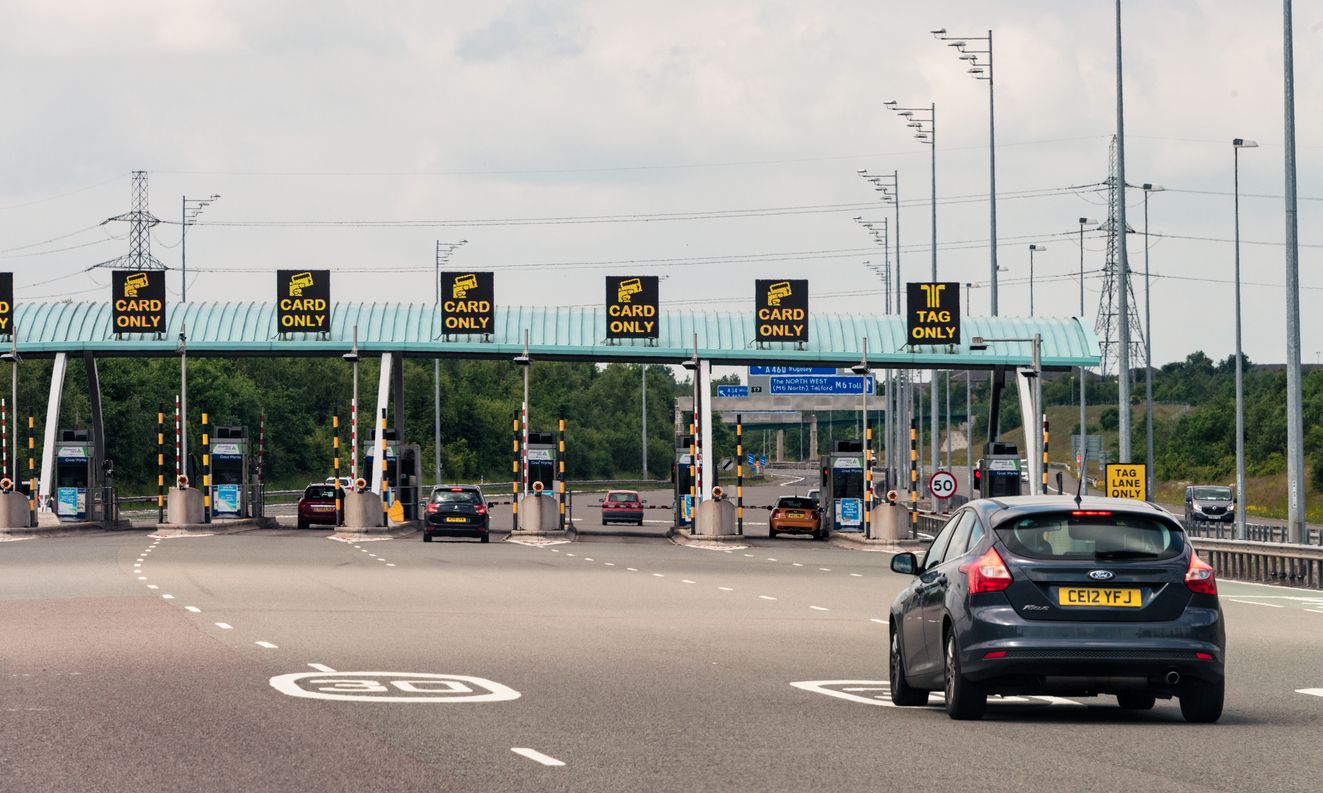
UK motorists could eventually face more toll roads under a new piece of legislation currently making its way through Parliament.
The Highways (Financing) Bill was introduced to the House of Commons on 10 September. Its purpose is to create a new way of financing major road projects in England by bringing in private investment and allowing tolls to be charged on roads covered by specific licences. Parliamentary Bills
That has understandably attracted attention.
But some of the headlines make the proposals sound broader than they currently are. The Bill does not introduce a nationwide toll on every motorway or A-road, and it does not give private companies an unrestricted right to start charging drivers wherever they choose.
So what does it actually propose, which roads could be affected, and what could it mean for ordinary drivers and businesses moving vehicles around Britain?
What Is the Highways (Financing) Bill?
The Bill creates a licensing system designed to bring private investment into major road infrastructure.
Under the proposals, a company could receive a licence allowing it to charge tolls on a qualifying trunk road in England in return for financing and securing specified road works.
Those works could include building a new road or increasing the capacity of an existing one. The legislation also contains provisions covering the ongoing operation, maintenance and improvement of roads developed through the scheme. UK Parliament
The Government's aim is to use what is known as a Regulated Asset Base, or RAB, model.
Rather than the full cost of a major road project being met directly from public spending, private investors can provide some of the capital. Revenue generated through regulated charges then helps support the project financially.
National Highways says the model is intended to help large road schemes move forward while reducing the immediate financial burden on taxpayers. National Highways
Does This Mean Every UK Road Could Become a Toll Road?
No.
This is one of the most important points.
Despite the wider discussion about UK road tolls, the Bill itself relates to trunk roads in England.
It does not create a general power to put tolls on every road in Britain.
A road would need to be included in a specific licence under the new system, and the legislation links the charging power to qualifying road infrastructure projects.
The Bill allows licences to be connected to the construction of a new trunk road or the improvement of an existing trunk road where that work increases its capacity. UK Parliament
So this is very different from waking up one morning and discovering that every motorway has suddenly become a toll road.
Could Existing Roads Be Tolled?
Potentially, but again there are important limits.
The legislation is not confined only to completely new roads. It allows the licensing system to cover an existing trunk road where qualifying improvements are being made, including work designed to increase its capacity. UK Parliament
That is one reason motoring organisations are concerned.
AA president Edmund King has argued that motorists already contribute heavily through fuel duty and Vehicle Excise Duty and warned that additional charges could be a step too far. Yahoo News Malaysia
But it would be misleading to describe the Bill as giving private operators free rein to charge whatever they like on any road.
There is a regulatory structure built into the legislation.
Who Would Control the Toll Prices?
The Office of Rail and Road (ORR) would play a central regulatory role.
Licences must include conditions governing tolls.
Those conditions could set the toll itself, set a maximum toll, or require the amount being charged to receive approval from the ORR.
The regulator would also be required to keep tolling conditions under review. UK Parliament
In addition, the ORR would have to publish a code designed to make sure toll charging is fair and transparent for road users. UK Parliament
That means the proposal is not simply:
Private company builds a road and chooses whatever price it wants.
The company would operate within a regulated licence.
Could Different Vehicles Pay Different Amounts?
Yes.
The Bill allows tolling schemes to distinguish between different circumstances.
For example, charges could potentially vary according to the time or day of travel, distance travelled, vehicle class or vehicle use.
A toll scheme would also have to specify any exemptions or reduced rates that apply. UK Parliament
That detail could become particularly important for commercial road users.
A car transporter, recovery truck or other commercial vehicle may therefore not necessarily pay the same amount as a private car, depending on the scheme eventually approved for a particular road.
At this stage, however, there is no universal tariff because individual schemes have not been established.
How Much Would Drivers Pay?
We don't know yet.
There is no national toll figure in the Bill.
Prices would depend on the individual project and licence.
The legislation sets up the mechanism through which tolls could be regulated rather than announcing a standard charge for motorists.
That is why claims that drivers are definitely about to face a particular new fee should be treated cautiously.
The Bill hasn't even completed its passage through Parliament yet.
Its First Reading took place on 10 September 2026, which is essentially the formal introduction of the legislation.
Its Second Reading — when MPs get their first major opportunity to debate its principles — is currently scheduled for 15 October 2026. Parliamentary Bills
It will then still face further Commons stages, scrutiny in the House of Lords and potentially amendments before it could receive Royal Assent.
Drivers Would Also Have a Consultation Process
The legislation includes another safeguard that hasn't received as much attention.
Before a qualifying licence is granted, the licensing authority would have to publish details of the proposal.
That notice would need to identify the road works involved and the road on which tolls could be charged.
There would then need to be a period of at least 28 days during which representations could be made about the proposal. UK Parliament
That does not mean every objection would stop a project, but individual toll schemes would not simply appear without a formal process.
The Lower Thames Crossing Is the Important Test Case
The biggest clue about how the Government expects this system to work comes from the Lower Thames Crossing.
National Highways has specifically described the new Bill as legislation that could allow private investment to support major schemes such as the Lower Thames Crossing.
The ORR has also said the legislation would enable it to become the project's economic regulator. National Highways
That makes the project particularly important.
If the Bill becomes law, the Lower Thames Crossing is expected to become an early example of how this type of privately financed, regulated road infrastructure could operate.
What happens there could influence how similar road projects are approached in future.
Why Is the Government Looking at Private Road Financing?
Major road schemes are extremely expensive.
At the same time, the way Britain raises money from motorists is changing.
Petrol and diesel drivers currently contribute significant amounts through fuel duty, but that revenue will decline as more drivers switch to electric vehicles.
The Government has already responded to that problem by announcing electric Vehicle Excise Duty (eVED).
From April 2028, fully electric cars are due to pay 3p per mile, while plug-in hybrids will pay 1.5p per mile, alongside the existing VED system. GOV.UK
That is separate from the Highways (Financing) Bill.
An EV mileage charge is a tax based on how far a vehicle travels.
A toll under the new Highways Bill would relate to the use of a particular road covered by a regulated scheme.
But taken together, these policies show why the wider question of how Britain pays for its roads is becoming increasingly important.
The traditional model built heavily around fuel duty will not generate the same revenue indefinitely.
Why Are Motorists Concerned?
The obvious concern is cost.
Drivers already pay for:
fuel or electricity,Vehicle Excise Duty,insurance,MOTs and servicing,parking,clean-air or congestion charges in some areas,and existing tolls or crossings on certain routes.
Adding another charge to a regular journey will therefore be unpopular, even where the money is helping finance new infrastructure.
The AA has argued that drivers already make a substantial contribution through existing motoring taxes. Opposition politicians have also criticised the proposals as another potential cost for motorists. Yahoo News Malaysia
The Government's counterargument is that private investment could allow major projects to be delivered without asking taxpayers to meet the entire cost upfront, while regulation would limit what operators can charge. National Highways
That debate is likely to become much louder when MPs discuss the Bill next month.
What Could Road Tolls Mean for Vehicle Transport?
For most motorists, a toll might simply add several pounds to an occasional journey.
For businesses covering thousands of miles every month, the calculation is different.
Vehicle transport and recovery providers already have to consider fuel, driver time, distance, insurance, vehicle maintenance and the location of their next job when deciding what a movement will cost.
If a route also includes a significant toll, that becomes another operating expense.
A transporter moving several vehicles between dealerships could cross the same road regularly.
An independent recovery provider may have no practical choice but to use a toll route when collecting a stranded vehicle.
And a long-distance vehicle movement might involve several chargeable roads as Britain's infrastructure develops.
That doesn't necessarily mean transport prices would suddenly rise across the country.
But route-specific charges could become another factor providers have to include when calculating a quote.
Why Route Efficiency Would Matter Even More
This is also where efficient vehicle logistics becomes important.
A transporter travelling empty for 100 miles already has fuel and labour costs.
If that journey eventually involves tolls too, empty mileage becomes even more expensive.
Providers that can combine compatible vehicle movements along the same route may therefore be able to spread some operating costs across several jobs.
For customers, that is another reason why flexibility around collection and delivery dates can sometimes result in a more competitive vehicle transport quote.
RecoBuddy's marketplace model allows independent providers to calculate their own price based on the actual journey they are being asked to complete.
If road charges eventually become part of that journey, providers can factor those costs into their quote rather than relying on a fixed nationwide rate.
The same principle applies to vehicle recovery, particularly where a recovery route uses a tolled crossing or major trunk road.
What Should Drivers Watch Next?
The most important date is now 15 October 2026.
That is when the Highways (Financing) Bill is scheduled for its Second Reading in the House of Commons. Parliamentary Bills
That debate should give motorists a much clearer idea of where MPs stand and which parts of the proposal are likely to face pressure or amendment.
For now, there are three important things to remember.
There is no blanket new UK road toll being introduced today.
The Bill would create a regulated system allowing tolls on qualifying trunk-road projects in England.
And the legislation is still going through Parliament and could change before becoming law.
The debate is worth following because it is bigger than one road project.
As fuel duty revenue falls, electric-car taxation changes and infrastructure becomes more expensive, Britain is going to have to make increasingly difficult decisions about who pays for the roads we use.
The Highways (Financing) Bill may be one part of that answer.
For drivers and businesses that spend their lives on those roads, the details will matter.